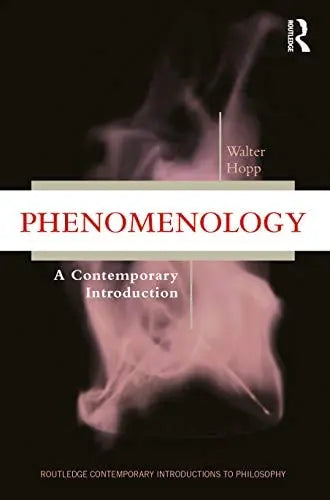

About this Paperback
- ISBN-13
- 9780367497392
- Author
- Walter Hopp
- Publisher
- Routledge, Taylor & Francis Group
- Edition
- 1
- Published
- 2020
- Pages
- 324
- Binding
- Paperback
Verified US edition — ISBN 9780367497392
ISBN 9780367497392 identifies the 1 of Phenomenology A Contemporary Introduction by Walter Hopp by Walter Hopp, published by Routledge, Taylor & Francis Group (2020). Every copy Book Shop Now ships against this ISBN is the genuine US-edition print run from the original publisher's authorized US distribution — no overseas reprints, no scanned facsimiles, no "international edition" rebranding. Verify this ISBN against your professor's syllabus before checkout.
About Routledge, Taylor & Francis Group
Routledge and its sister imprints CRC Press, Focal Press, and Taylor & Francis are part of Informa plc — together producing reference works across counseling, social sciences, language studies, engineering, and academic specialties. CRC Press's medical and clinical references (50 Landmark Papers series, surgical atlases) are board-prep staples. Routledge social-sciences titles dominate graduate-level reading lists. We source Routledge family titles directly from authorized US distribution.
How Book Shop Now sources this title
Every book Book Shop Now ships is sourced directly from US publishers or their authorized US distributors — never from overseas grey-market resellers, marketplace commingled inventory, or scanned facsimile reprints. We do not sell "international edition" copies relabeled as US editions, and we do not accept loose-leaf substitutions for hardcover orders. Each shipment is inspected against the listed ISBN before dispatch, ships from US warehouses with 1-3 business day handling, and is covered by a 14-day return policy on books that arrive damaged or mismatched. Read our guide to spotting counterfeit textbooks →